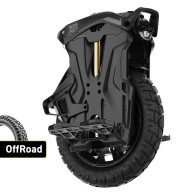
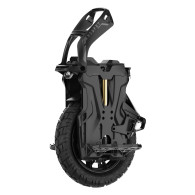
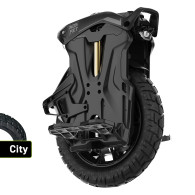
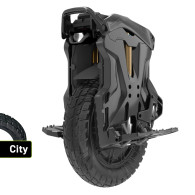
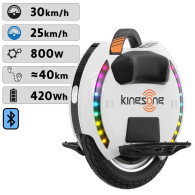
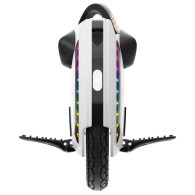
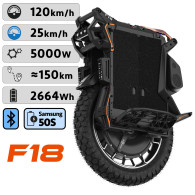
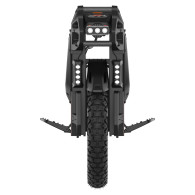
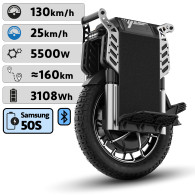
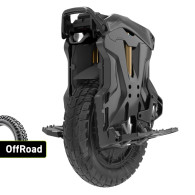
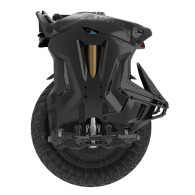
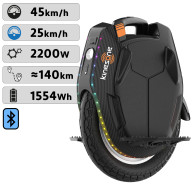
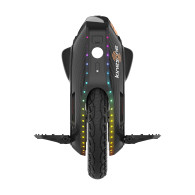
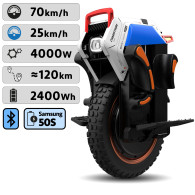
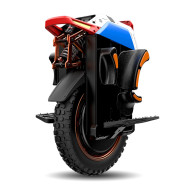
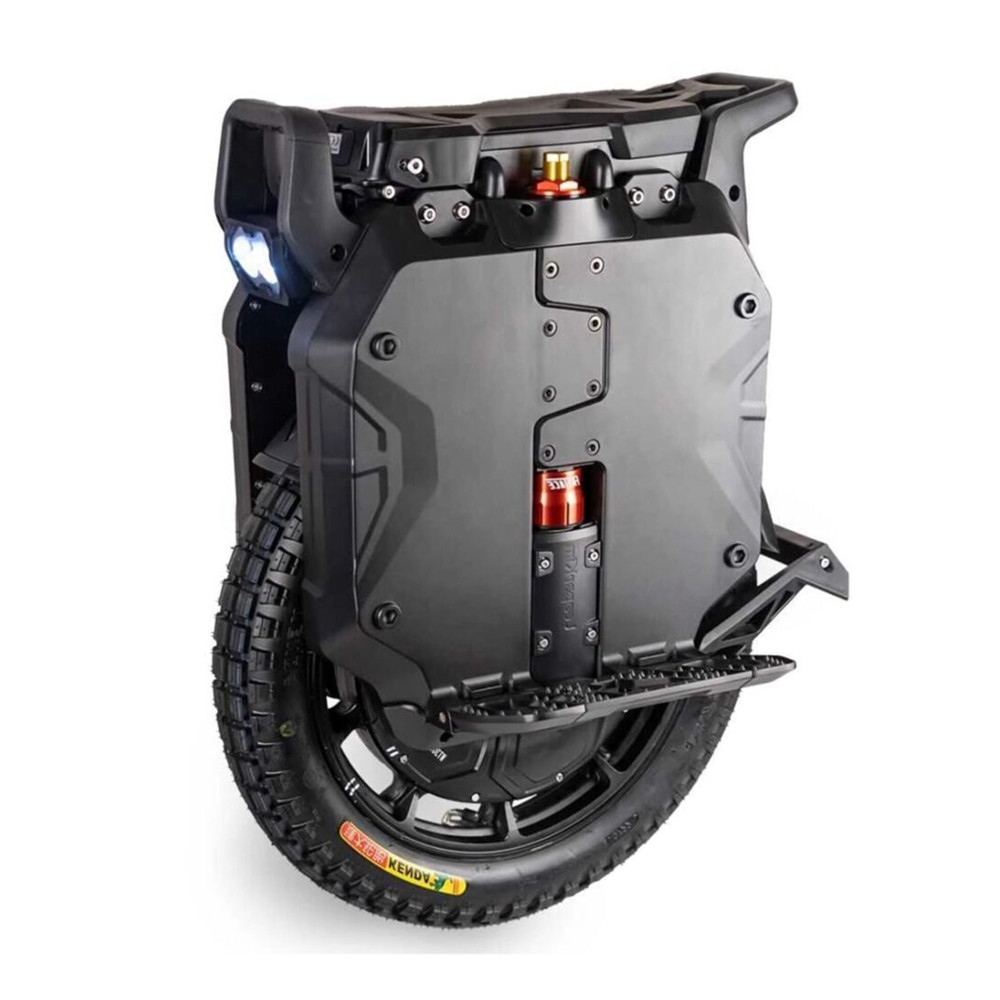
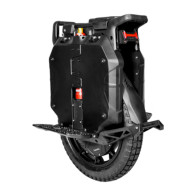
The Leaperkim Sherman L is a high-end electric unicycle from Veteran, positioned at the top of the brand's long-range segment. It crowns the Sherman lineup by combining the best of two worlds: the refined chassis of the Lynx and the touring DNA of the Sherman S, with a battery capacity significantly increased. The promise is clear: to offer experienced riders a unicycle capable of covering very long distances without multiplying charging stops, while retaining the high-speed stability that has made the Sherman range's reputation. It's an electric unicycle designed for dedicated leisure use — road trips, long outings, exploring mixed terrain — rather than everyday urban mobility. Its substantial size and power make it a machine reserved for riders already comfortable on an electric unicycle, seeking a genuine long-distance touring wheel rather than an all-purpose vehicle.
Overview
The Leaperkim Sherman L belongs to the segment of high-end 20-inch electric unicycles, oriented toward touring and long distance. It positions itself as a high-end model combining the best of the Lynx and the Sherman S within the Veteran range: a 3200W nominal motor (8000W peak) powered by a 4000Wh battery at 151.2V with Samsung 50S cells, mounted on a 20-inch tubeless wheel. This sizing meets a specific need, that of the rider who wants to travel far without multiplying charging stops, with a real-world range estimated between 130 and 160 km. The FastAce hydraulic suspension, adjustable in compression and rebound over 90 mm of travel, complements this grand-touring vocation by absorbing terrain irregularities over long sessions. At 46-47 kg depending on the source, this is an imposing machine, which field reports describe as a massive object to handle rather than a lightweight mobility device — clearly designed for dedicated leisure use, on both road and mixed terrain.
Technical specifications
| Specification |
Detail |
| Brand |
Leaperkim (Veteran) |
| Model |
Sherman L (50S) |
| Category |
Electric unicycle (EUC) |
| Dimensions / Weight |
72 x 57.5 x 20.8 cm (H x L x W) — 46 to 47 kg depending on the source |
| Motor |
3200W nominal, 8000W peak |
| Battery |
4000Wh, 151.2V, Samsung 50S cells |
| Announced range |
figure varies by source (140 to 230 km); real-world range estimated between 130 and 160 km |
| Top speed |
figure varies by source (90 to 130 km/h depending on use/freewheel) |
| Water resistance |
IP rating not confirmed by the manufacturer (IPX6/IP55 mentioned by a retailer, for indicative purposes) |
| Wheel |
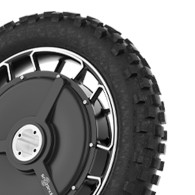
20 inches, tubeless tire (road tire as standard, knobby/off-road option) |
| Suspension |
FastAce hydraulic, 90 mm travel, adjustable compression and rebound |
| Lighting |
20W/2500 lumens dual LED headlight, rear stop light |
Who is it for?
The Leaperkim Sherman L is aimed above all at experienced riders seeking a genuine long-distance touring wheel: its 4000Wh battery and real-world range of 130 to 160 km make it a machine built for road trips and long outings, where other electric unicycles would require frequent charging stops. It also suits riders who prioritize high-speed stability and mixed-terrain exploration, with the hydraulic suspension adjustable over 90 mm of travel absorbing both tarmac and rougher tracks. Finally, it's a wheel for those who already own a Sherman S and are looking for an extra notch of comfort and robustness, without expecting a spectacular leap in range. Conversely, it's clearly not a beginner's wheel: its weight of 46 to 47 kg is felt at start-up, and field reports describe handling that requires confidence before finding its fluidity once underway.
What sets it apart
The first differentiating element of the Sherman L is its battery capacity: at 4000Wh, it shows a 50% increase over the Sherman S, paired with an improved smart BMS for finer energy management on long trips. Second notable point, electronic safety: the wheel remains functional even in the event of a Hall-effect sensor failure, a valuable safety net on a machine of this size. Finally, despite its battery power, the design stays controlled: only 0.2 inch more in width than the Lynx, which limits the chassis's bulkiness. On the ground, this evolution is felt mainly in the suspension, now progressive rather than linear, and in a chassis judged sturdier than that of the Sherman S — two points confirmed by feedback from users already familiar with the Sherman range.
What we like / Points of caution
- The generous real-world range (130 to 160 km), which allows for stringing together long trips without multiplying charging stops
- The FastAce hydraulic suspension with progressive spring, more refined than on the Sherman S according to field reports
- Surprisingly precise low-speed handling once underway, with a turning radius judged better than that of comparable wheels
- Enhanced safety thanks to Hall-less operation in the event of a failure
- A weight of 46 to 47 kg that is clearly felt at start-up, described as a slower time to get moving than a lighter wheel
- A water-resistance rating not officially confirmed by the manufacturer, with only a retailer estimate (IPX6/IP55) circulating
- A premium price and a use clearly oriented toward leisure, not well suited to frequent carrying (stairs, public transport)
FAQ
- What real-world range should be expected from the Leaperkim Sherman L? The manufacturer announces between 140 and 230 km depending on the source, but the real-world range observed is more likely between 130 and 160 km in everyday use, which remains generous for this type of electric unicycle.
- Is upgrading from a Sherman S to a Sherman L worth it? The main gain concerns the suspension (progressive spring versus linear) and the sturdiness of the chassis, more than the range: battery capacity increases by 50%, but weight and bulk also increase. A satisfied Sherman S owner has no urgent need to switch.
- Is the Sherman L suitable for daily use in the city? Not really. With a weight of 46 to 47 kg, it's a wheel designed for leisure and long-distance use, not very practical to carry up stairs or on public transport. It's aimed more at road trips than at daily urban commuting.


 en
en Français
 Español
 Deutsch

 FREE DELIVERY OVER € 300 PURCHASE
 Customer Support
 Several payment methods